
Seedling and SpireProperty Services

One vendor, every season

What each season actually asks of a property

Spring, summer, fall and winter each do something different to a building and its grounds. Here is what each one needs, which service covers it, and whether it is bought on a contract or quoted per job.

  • Staten Island · Brooklyn · New Jersey
  • Fully insured
  • Contracts or per-job quotes
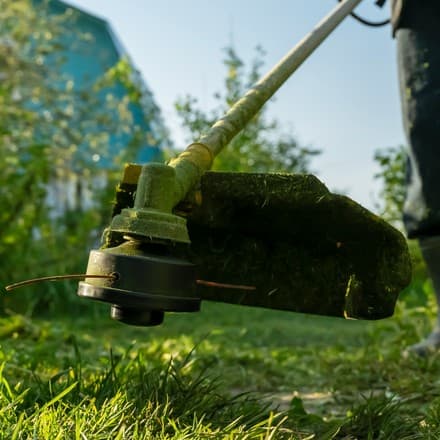
A string trimmer cutting long grass at the edge of a lawnA pickup truck fitted with a plow blade on snow-covered ground

The year, not the visit

A property does not need the same thing twice in a row

Most property work gets bought one problem at a time — the lawn is long, the walk is icy, the steps have cracked. Each of those is real, and each one is also a symptom of a season doing what that season does.

Seen across a year, the work is far more predictable than it looks from inside any single month. Winter opens the joints that spring exposes. Summer's growth sets how much there is to clear in fall. And what does not get closed out before the first hard freeze waits until spring, in worse condition than it was.

That is the whole argument for one vendor across the year rather than four: not that it is cheaper on any given visit, but that the crew showing up in March is the one that saw the property in November.

Get a Free Quote

Jump to a season

Four sections, each one covering what the season does to a property, the work it calls for, and how that work is normally bought.

How this is bought

Seasonal, annual or per-property contracts, and job orders for defined projects

Contracts and job orders

Winter's damage becomes visible all at once

Spring

Nothing about a property degrades faster than it does under snow, and none of it is visible while the snow is there. When it goes, it goes all at once: salt residue greying the walks and steps, grit and sand washed into beds and corners, joints opened where water got in and froze, beds full of a winter's worth of debris with everything about to grow through it.

Spring is also when a property's appearance resets for the year. A building that read as perfectly maintained in January starts reading as neglected within about three weeks of the first warm spell — not because anything broke, but because everything around it woke up and it didn't.

It is the right season to have concrete and masonry looked at, for a reason that has nothing to do with the weather being pleasant: freeze-thaw damage from the winter just ended is at its most obvious now, and a crack quoted in spring is a smaller job than the same crack quoted next spring.

What the season calls for

How it is usually bought

Recurring grounds work restarts under an existing agreement. Anything the winter broke is a job order — quoted free and in writing, with no obligation.


Growth is the job, and the property is being looked at

Summer

In summer the property does the work and the schedule keeps up with it. Grass grows faster than anyone budgets for, hedges close in on walkways, weeds find every seam in a lot, and the difference between a property that looks managed and one that doesn't is almost entirely a question of rhythm rather than effort.

It is also the season when a property is most looked at — showings, leasing, walk-throughs, board meetings held on site. Edges, beds and clean pavement carry more weight in those months than at any other point in the year.

And it is the working season for anything that needs dry weather and long days: exterior painting, decking, repairs, and masonry that has to cure. Projects that get put off in summer tend to become fall projects competing with the leaf schedule.

What the season calls for

How it is usually bought

The recurring cut belongs on a contract — it is the clearest case there is for one. Projects run alongside it as separate job orders, whether or not you hold an agreement.

The only season with a hard deadline

Fall

Fall is the season that does not wait. Leaves and debris are volume work with a short window, and every low point on a property that collects water becomes a problem the moment the temperature drops through freezing with the water still sitting in it.

It is also the last honest chance at outdoor repair. Concrete, masonry, drainage and exterior carpentry all want to be finished before the first hard freeze, and work that misses that window does not resume in three weeks — it resumes in spring, having spent a winter getting worse.

And it is when winter gets decided. Snow is booked before the season, not during the storm: a property without an agreement in place when the first storm lands is competing for a plow with everyone else who also waited.

What the season calls for

How it is usually bought

This is the month-of-the-year for agreements: snow on a seasonal contract, and job orders written now for anything that has to be finished before the freeze.

Access and liability, at whatever hour it starts snowing

Winter

Winter narrows a property down to one question: can people get in and out of it safely. A walkway becomes a liability the moment it ices, and it does not wait for business hours to do it — which is why snow and storm response runs around the clock through the season while the office itself keeps ordinary hours.

The work is plowing, salting and de-icing, and clearing walkways and entrances rather than only the lot: the lot is what gets photographed and the entrance is what people actually slip on.

It is also the season when everything else moves indoors. Office and common-area cleaning carries on regardless of the weather, and interior projects — drywall, carpentry, painting, fixtures — are far easier to schedule in the months when nothing outside can be started anyway.

What the season calls for

How it is usually bought

Snow runs on a seasonal agreement set up before the season. Interior work is quoted per project, and winter is usually when there is room in the schedule for it.

All eight services, all four seasons

The year in one view

  • Property Maintenance
    Spring — normally doneSummer — normally doneFall — normally doneWinter — normally done
  • Landscaping & Lot Cleaning
    Spring — normally doneSummer — normally doneFall — normally doneWinter — not usually done
  • Snow Removal
    Spring — not usually doneSummer — not usually doneFall — when the weather allowsWinter — normally done
  • Power Washing
    Spring — normally doneSummer — normally doneFall — when the weather allowsWinter — not usually done
  • Window Cleaning
    Spring — normally doneSummer — normally doneFall — normally doneWinter — when the weather allows
  • Office Cleaning
    Spring — normally doneSummer — normally doneFall — normally doneWinter — normally done
  • Concrete & Masonry
    Spring — normally doneSummer — normally doneFall — normally doneWinter — not usually done
  • Repairs & Improvement Projects
    Spring — normally doneSummer — normally doneFall — normally doneWinter — when the weather allows
Normally done in that seasonWhen the weather allowsNot usually that season's work

This is a note about weather, not about availability — it is not a list of months we work in. Conditions, not the calendar, decide when washing, masonry and exterior painting can be done well, and the answer for a particular property in a particular week is a question worth just asking.

Commercial & managed

A year that can be budgeted and evidenced

For a managed property the seasons are a budget line and a paper trail before they are anything else: what recurs goes on an agreement so it is not re-authorized twelve times a year, capital work is quoted per job order and invoiced so it can be told apart at year end, and the certificate of insurance and W-9 are already on file when the first storm lands.

How we work with property managers
Residential

One call instead of four contractors a year

For a single home the seasons usually arrive as four separate searches — someone for the lawn in May, someone for the walk in August, someone for the steps in October, someone with a plow in January. It is the same crew for all four here, and every quote is written, free and carries no obligation.

What we do for homeowners

Questions

Working across the seasons — common questions

No. A single seasonal, annual or per-property agreement can carry whatever recurs on the property across the year, with job orders written separately for defined projects. Most ongoing clients end up using both — a contract for the rhythm, job orders for the work that has a start and an end.

Before the season, not during a storm. Snow is booked ahead because the alternative is competing for a plow with every other property that also waited, at the moment everyone needs one at once. Fall is when this gets decided.

Yes. Nothing here requires taking the whole year — a snow-only agreement, or a single spring cleanup, is a normal way to start, and it tells you far more about a vendor than a proposal does.

It is weather-dependent rather than calendar-dependent. Washing needs temperatures that will not freeze on the surface, and masonry needs conditions it can cure in. Ask whenever it comes up and you will get a straight answer about whether the conditions are right, rather than a season you have to wait for.

The practical one is that the same crew already knows the property — where it drains, where it ices, which corner collects debris — so nothing has to be re-explained four times a year. The administrative one is one certificate of insurance, one W-9, one renewal date and one point of contact, instead of four of each.

Contact us today for a free quote!

One season or all four, across Staten Island, Brooklyn & New Jersey. Written scope and price before anything starts — free, and with no obligation.

Call UsFree Quote